





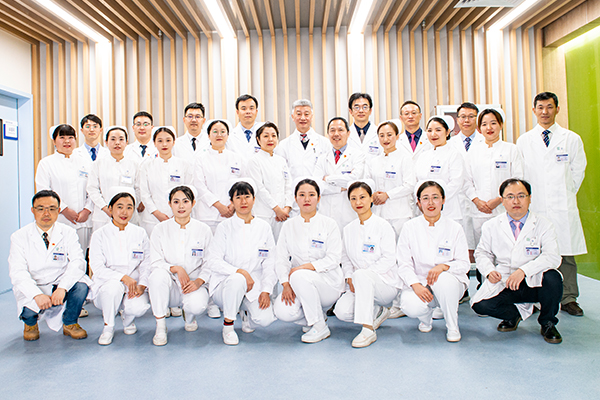

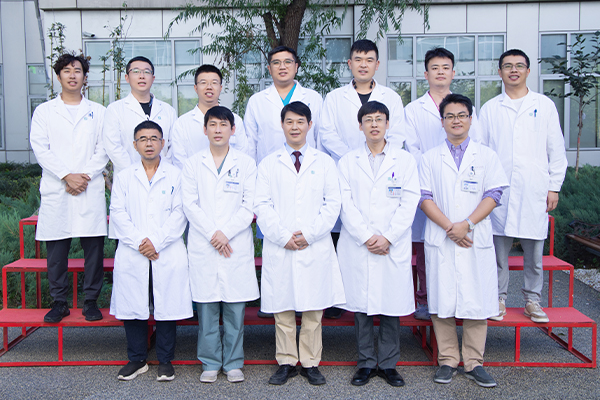
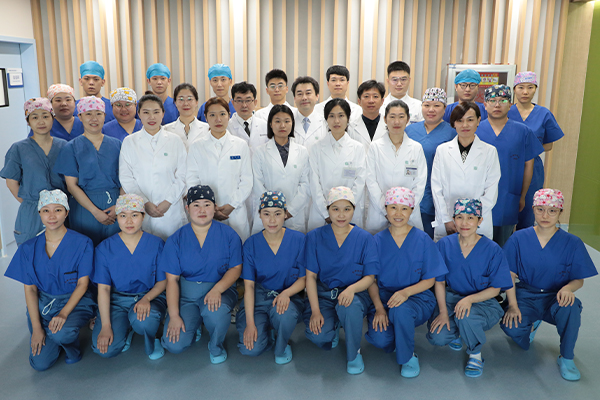
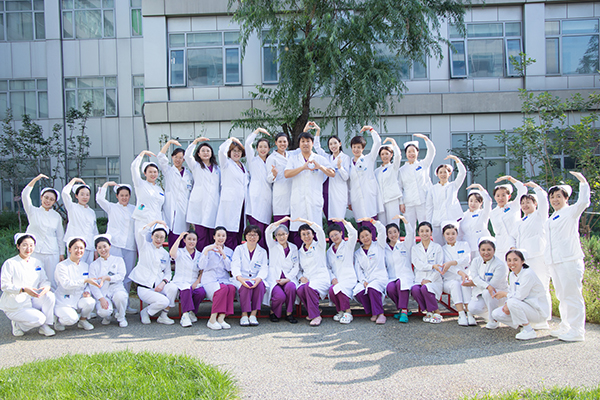







Professor Jia Jidong and Professor Xie Wen's Team from the Chinese Academy of Medical Sciences and Peking Union Medical College Hospital First Proposed the Standard for Stable Improvement of Liver Function Required for Decompensated Hepatitis B Cirrhosis Patients to Achieve Recompensation in the Journal of Hepatology
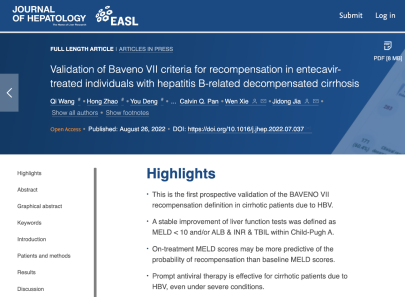
On August 26, 2022, Professor Jia Jidong from Capital Medical University's Beijing Friendship Hospital and Professor Xie Wen from Beijing Ditan Hospital published a research paper titled "Validation of Baveno VII criteria for recompensation in entecavir-treated individuals with hepatitis B-related decompensated cirrhosis" in the international authoritative journal of hepatology, Journal of Hepatology. This study validated the definition of liver cirrhosis recompensation proposed by the Baveno VII consensus in patients with decompensated cirrhosis related to hepatitis B and for the first time put forward the standard of stable improvement in liver function required for such patients to achieve recompensation after entecavir treatment. Associate Professor Wang Qi, Chief Physician Zhao Hong and doctoral student Deng You from Beijing Ditan Hospital were the co-first authors, and Professors Jia Jidong and Xie Wen were the co-corresponding authors.
Hepatitis B virus (HBV) infection is a major public health issue, with approximately 820,000 deaths worldwide each year attributed to HBV infection, the majority of which occur due to liver cirrhosis and hepatocellular carcinoma (HCC). Among them, China accounts for about one-third of the global chronic HBV infections. Numerous studies have confirmed that nucleoside (acid) analogues (NAs) treatment can significantly inhibit HBV replication, thereby improving liver tissue inflammation and fibrosis in most patients with chronic hepatitis B (CHB). Many studies have also shown that NAs can improve the long-term prognosis of patients with liver cirrhosis, even those in the decompensated stage. In 2021, the Baveno VII consensus first proposed the definition of recompensation, which includes: (1) removal/inhibition/cure of the main cause of liver cirrhosis; (2) no recurrence of ascites (discontinuation of diuretics), hepatic encephalopathy (discontinuation of lactulose/rifaximin), and esophageal and gastric variceal bleeding for at least 12 months; (3) stable improvement in liver function tests, including albumin, international normalized ratio (INR), and bilirubin. However, the above definition of recompensation does not provide critical values for stable improvement in liver function, making it difficult to directly apply in clinical judgment.
To address this important clinical question, Professor Jia Jidong and Professor Xie Wen conducted an in-depth analysis of the data from a prospective cohort study supported by the Beijing Municipal Science and Technology Commission. This project involved 10 medical institutions in Beijing, Tianjin, and Hebei, lasted for 5 years, and enrolled 320 patients with decompensated cirrhosis due to HBV infection and ascites who received entecavir antiviral treatment. Among the 283 patients who completed 120 weeks of follow-up, 92.2% (261/283) achieved HBV DNA levels below the detection limit, and 60.4% (171/283) achieved recompensation as defined by the Baveno VII consensus, that is, ascites resolution, no recurrence of hepatic encephalopathy, and no esophageal and gastric variceal bleeding for more than 12 months. More importantly, the team further clarified the criteria for stable improvement in liver function required for recompensation: Model for End-Stage Liver Disease (MELD) score < 10, albumin > 35 g/L, INR < 1.50, and total bilirubin < 34 μmol/L. According to this standard, 56.2% (159/283) of the patients in this cohort fully met the recompensation definition in the Baveno VII consensus.
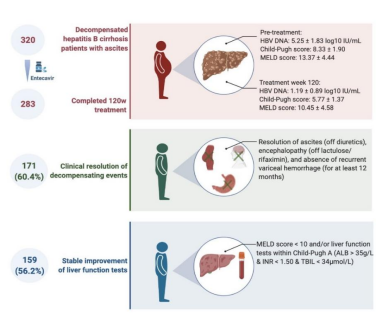
Figure. A prospective cohort study on the recompensation of decompensated hepatitis B liver cirrhosis after antiviral treatment
This article is the first to verify the definition of recompensation in decompensated hepatitis B cirrhosis patients after antiviral treatment as proposed in the Baveno VII consensus and to put forward specific criteria for stable improvement of liver function. The team utilized data from a prospective Chinese cohort study to provide timely and high-quality clinical research evidence in support of the international consensus definition, refined and improved its specific criteria, and also offered important implications for future research directions in this field.
This research was funded by the Beijing Science and Technology Major Project (D171100003117005) and the Key Project of the Gastroenterology Discipline Collaborative Development Center of the Beijing Municipal Hospital Administration (XXZ04).

Xie Wen, a chief physician, professor and doctoral supervisor, is the director of the Liver Disease Center at Beijing Ditan Hospital, Capital Medical University and the National Center for Infectious Diseases (Beijing). She is also the vice president of the Hepatology Branch of the Beijing Medical Association, the deputy director of the Tuberculosis and Liver Disease Professional Branch of the Chinese Anti-Tuberculosis Association, and the deputy secretary-general of the Clinical Toxicology Branch of the Chinese Society of Toxicology. She serves as a member of the editorial boards of several journals, including "Liver" and "Journal of Clinical Hepatology". Her main research focuses on the recompensation of patients with decompensated liver cirrhosis, as well as the clinical and basic research of fatty liver disease and drug-induced liver injury. She has led and participated in five projects funded by the National Natural Science Foundation of China. She has published over 20 English papers in journals such as Journal of Hepatology and Clinical Gastroenterology and Hepatology as the first or corresponding author (including co-corresponding author). She has also authored or co-authored eight books.
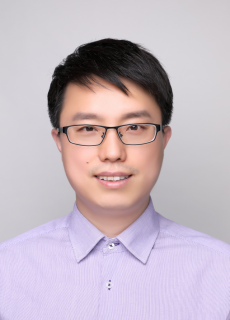
Wang Qi, a chief physician, professor and doctoral supervisor, is the deputy director (in charge) of the Center of Liver Diseases at Beijing Ditan Hospital, Capital Medical University and the National Center for Infectious Diseases (Beijing). As a visiting scholar at the University of Utah School of Medicine, he specializes in hepatology and infectious diseases. Dr. Wang holds key academic roles, including Standing Committee Member of the Beijing Medical Association Hepatology Branch and Committee Member of the Chinese Research Hospital Association’s Liver Disease Committee. He is also a Youth Committee Member of the Chinese Medical Association’s Tropical Diseases and Parasitology Branch and participates in specialized groups such as the Medical Virology Group and Precision Diagnosis and Treatment of Liver Diseases Group. Selected for prestigious talent programs, including the Beijing High-Level Public Health Technical Talent Development Project and the "Outstanding Talents" program, Dr. Wang has led three National Natural Science Foundation of China (NSFC) projects and eight provincial/municipal-level initiatives. His research on liver cirrhosis recompensation has influenced clinical guidelines. He has published in top journals (Journal of Hepatology, Hepatology, Annals of Internal Medicine, Nature Communications, JCI Insight), with a highest impact factor of 30.08. His work has been presented at APASL and AASLD meetings, with 10 abstracts accepted. He holds five patents and has contributed to 10 medical textbooks. Dr. Wang serves as an NSFC and Beijing Natural Science Foundation reviewer and holds editorial roles at Chinese Journal of Clinicians, Chinese Journal of Experimental and Clinical Infectious Diseases, and others. He is also a reviewer for Journal of Clinical Hepatology and Journal of Medical Virology.

Zhao Hong is a Chief Physician and Master of Medical Science at Beijing Ditan Hospital, Capital Medical University, affiliated with the National Center for Infectious Diseases (Beijing). She serves on multiple professional committees including the Beijing Medical Association's Hepatology Branch and the Chinese Society of Toxicology's Clinical Toxicology Committee. Specializing in chronic liver diseases, hepatic fibrosis and cirrhosis, Dr. Zhao has led four research projects and participated in over 10 national research programs, including China's 13th Five-Year Plan Major Projects and NSFC-funded studies. She has authored over 40 peer-reviewed publications as first or corresponding author.Her work bridges clinical practice and scientific research, focusing on improving diagnosis and treatment of liver diseases.

You Deng is a Resident Physician and Ph.D. graduate, recognized as a 2024 Outstanding Graduate of Capital Medical University.

 京公网安备 11010502052111号